

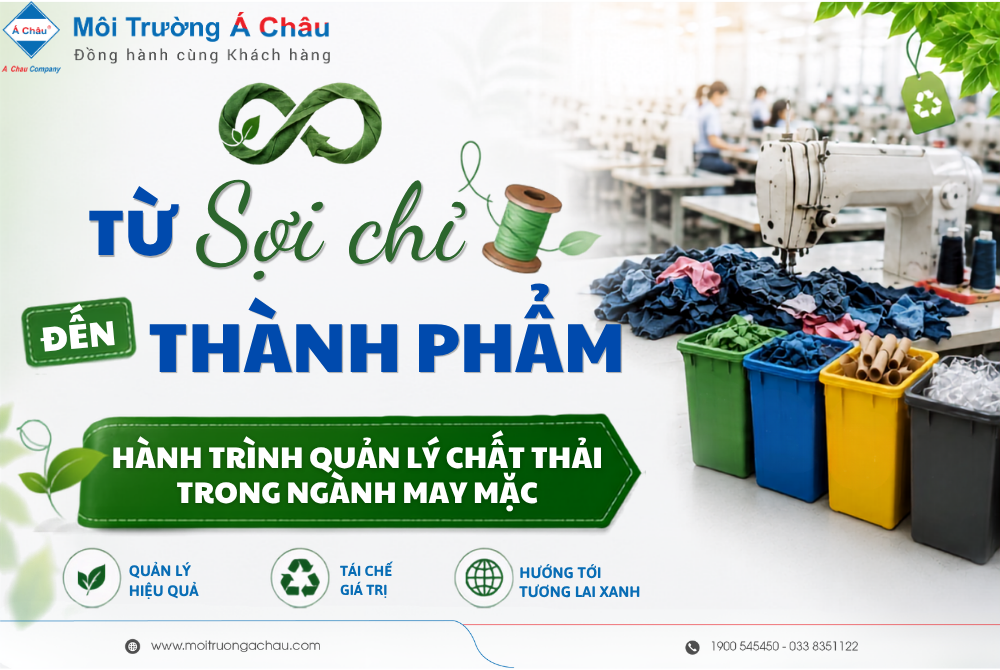
The Journey of Waste Management in the Garment Industry
As shirts or denim jeans, backpacks are the result of a complex production process comprising numerous tightly integrated stages. Alongside the creation of value, each stage generates specific streams of general industrial waste.
Environment situation and sustainable development element, aprecise source identification, efficient waste sorting, and efficient collection and recycling operations significantly improve supply chain competitiveness.
_english_1.png)
Each operation specific types of waste
CMT – Cut, Make, Trim
Regular operation in the garment industry, focusing on fabric cutting, assembly (sewing), and product finishing. A main characteristic of this group is the generation of large quantities of fabric scraps from cutting tables, alongside paper, plastic (including nylon), and fabric cores during production.
FOB/ODM Operations:
Production active of enterprises to manage the entire process, raw material procurement and sample development to mass production. In addition to fabric scraps (clippings), this model generates significant quantities of plastic packaging, cardboard cartons, and excess raw materials and accessories resulting from warehousing, production, and packaging operations.
Specialized Auxiliary Manufacturing Factories (Sofas, Furniture, Backpacks, Stuffed Toys)
Typically, utilize a wide range of materials with unique compositions, such as canvas, synthetic leather (PU/PVC), batting rolls, and loose fiber fill. Consequently, the waste generated is more diverse, requiring sorting, collection, and recycling solutions tailored to each specific material group.
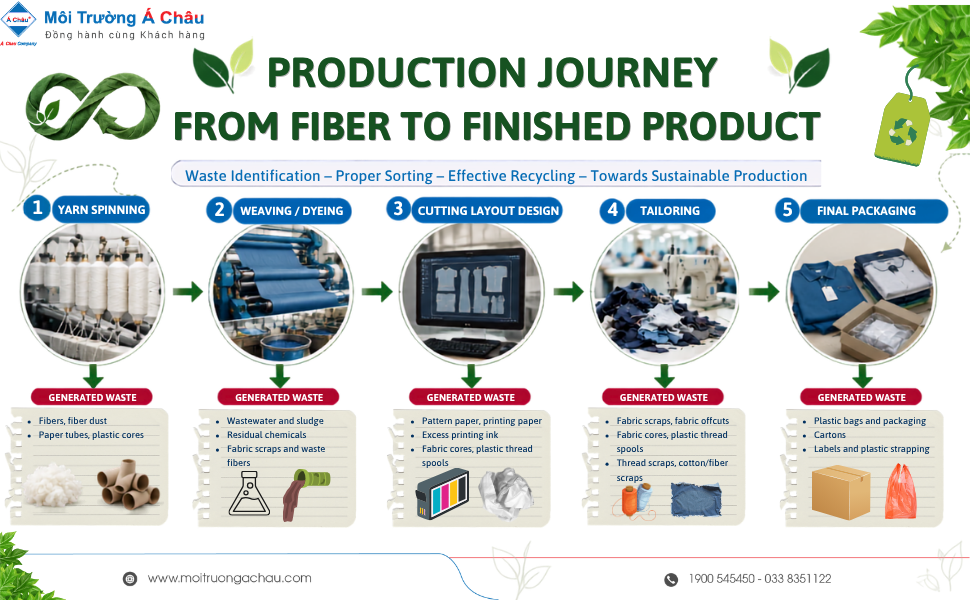
Touchpoint in the production procedures
Cutting stage
Layers of fabric are spread and cut according to computer-generated layouts to optimize material usage. However, this stage also generates the largest volume of fabric scraps. If sorted at the source by material type such as Cotton, Polyester, CVC or T/C.
Sewing and assembly stage
As plastic thread spools, fabric cores, thread trimmings, and cotton/fiber scraps. Although small in size, these materials can be recovered if kept separate from domestic waste and the othes.
Packaging stage
Activities such as ironing, quality inspection, and packaging typically generate pattern paper, plastic fasteners, plastic bags, and cardboard cartons. Collecting these materials separately enhances opportunities for reuse and recycling while reducing the burden on final waste treatment processes.
.png)
Appropriate Solutions
CMT Facilities
Moi Truong A Chau (MTAC) assists enterprises in establishing at-source sorting processes—such as categorizing fabric scraps by material type (e.g., Cotton, Polyester, CVC, or T/C). This solution enhances the quality of recyclable materials while enabling businesses to track and report recycling rates in compliance with client and brand requirements.
For manufacturers of accessories and finished goods (backpacks, sofas, stuffed toys, etc.)
Implementing solutions for the collection, sorting, and appropriate processing of specific categories of surplus materials and supplies, thereby optimizing storage space, reducing environmental management costs, and enhancing operational efficiency.
Comprehensive technical support and standardization
MTAC partners with enterprises to conduct on-site assessments of material and waste flows within the factory. Based on these findings, we provide expert advice on the layout of storage areas, as well as the systematic sorting and labeling of general industrial waste, ensuring compliance with internal management requirements and meeting the standards of audits conducted by international clients and brands.
MTAC+ grows together with Partnership
In the garment industry, waste management is not merely a compliance requirement; it is an opportunity for businesses to optimize resources, enhance circular value, and elevate their standing within the global supply chain.
If your business is seeking waste management solutions tailored to your specific production needs and sustainability goals, MTAC is ready to partner with you every step of the way—from initial assessment and consultation to actual implementation.
Source: A Chau Environemnt
Other news
.png)
.png)
_2.png)
.png)
Customer Support
Hotline: 1900 54 54 50 (909 VND/min) - (+84)362851122 (Whatsapp, Viber)
Our regional customer & partner services center in Vietnam:
Northern Services Center: 033 8351122
Central Services Center: 0902 450585
HCMC – Eastern Services Center: 033 8351122
Southern Services Center: 0902 912586
Email: info@moitruongachau.com


Visitors
- Online :

Copyright 2013 - 2025 © A CHAU ENVIRONMENT CO., LTD

